
Introduction
In a fast‑paced software ecosystem, the demand for rapid delivery without compromising quality has never been higher. Traditional code review, while still indispensable, often becomes a bottleneck manual, subjective, and time‑consuming. Recent advances in large language models (LLMs) like GPT‑4 and Claude 3 have opened a new frontier: AI‑powered code review. These models can parse source code, understand intent, and provide actionable feedback in real time, effectively acting as an on‑call senior engineer that never sleeps.
This article explores how LLMs can transform the code review process, outlines a practical real‑time feedback workflow, discusses the benefits and challenges, and offers best practices for integrating AI into your development pipeline. We’ll also look ahead to future trends that promise to make AI‑driven code review an industry standard.
Limitations of Traditional Code Review
Traditional code review typically follows a linear, manual process:
Pull request creation – A developer submits code for review.
Reviewer assignment – A senior engineer or peer is assigned.
Manual inspection – The reviewer reads code, runs tests, and writes comments.
Iterative feedback loop – The developer revises code based on feedback.
While this workflow promotes code quality, it suffers from several pain points:
Latency – Review turnaround can take hours or days, especially in distributed teams.
Subjectivity – Different reviewers apply varying coding standards, leading to inconsistent feedback.
Scalability – As team size grows, the number of code reviews increases linearly, straining senior engineers.
Human fatigue – Repetitive patterns (e.g., spotting off‑by‑one errors) can be missed due to reviewer fatigue.
Knowledge gaps – Newcomers may not understand architectural context, causing superficial reviews that miss deeper issues.
These constraints can slow product delivery, inflate defect rates, and increase technical debt. An automated, intelligent assistant that can surface best practices instantly would alleviate many of these problems.
Understanding LLMs for Code Understanding
LLMs are trained on vast corpora of text, including millions of code repositories. Their architecture transformers with self‑attention mechanisms enables them to capture syntactic and semantic patterns across languages. When fine‑tuned for code, LLMs can:
Parse abstract syntax trees (ASTs) implicitly, recognizing control flow, data structures, and dependencies.
Infer intent from variable names, comments, and surrounding context.
Generate code snippets that satisfy a given specification.
Detect anti‑patterns such as duplicated logic, dead code, or unsafe API usage.
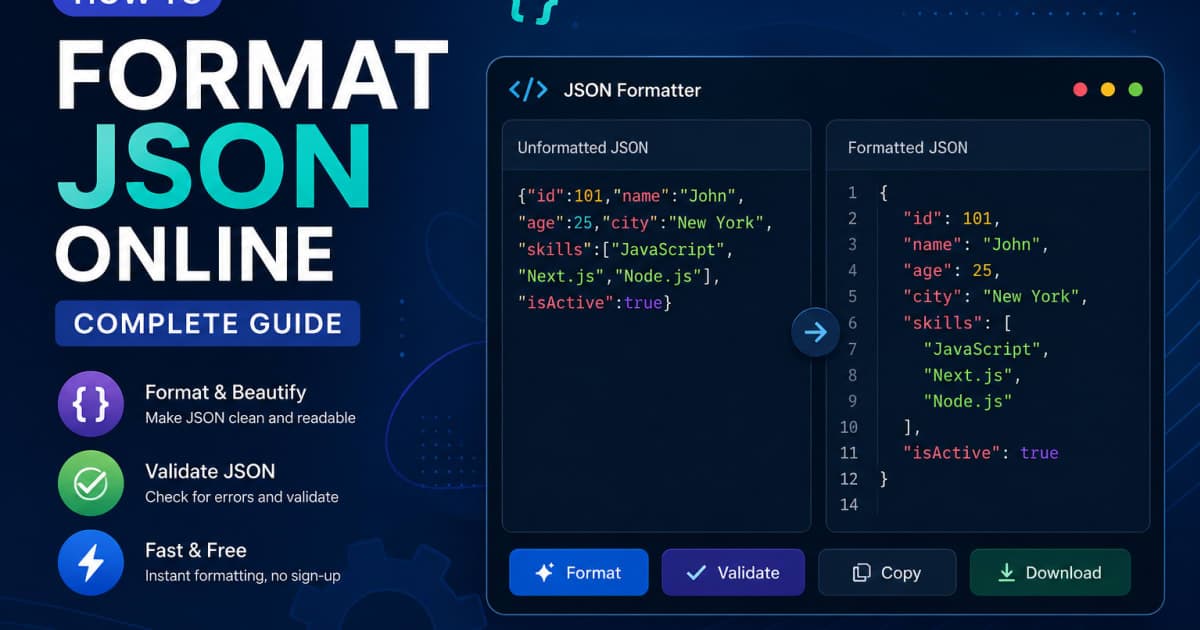
Because LLMs operate on raw text, they can be integrated into existing tooling without deep language‑specific parsers. For example, an LLM can accept a diff payload and return a JSON object describing suggested changes. When the JSON is formatted, you can use the JSON Formatter to validate its structure before applying it to the codebase.
Real‑Time Feedback Workflow
Implementing AI‑powered code review requires a well‑defined workflow that blends human oversight with machine intelligence. Below is a practical pipeline that can be adopted in most CI/CD setups:
Pre‑Commit Hook
Use a lightweight LLM wrapper to scan code locally before the commit.
Highlight potential issues and suggest fixes inline.
Example command:
git commit -m "Add new feature" --no-verifyThe hook can invoke the LLM via a REST endpoint and display suggestions in the terminal.
Pull Request Generation
When a PR is opened, the CI system triggers an LLM analysis job.
The model receives the diff and returns a structured review:
{
  "issues": [
    { "line": 42, "severity": "warning", "message": "Possible null reference" },
    { "line": 87, "severity": "error", "message": "Hard‑coded credentials found" }
  ],
  "suggestions": [
    { "line": 42, "fix": "Add null‑check before dereferencing" }
  ]
}
Use the JSON Formatter to ensure the output is valid before applying patches.
Automated Comment Posting
The CI job posts comments directly on the PR using the platform’s API (GitHub, GitLab, Bitbucket).
Comments include LLM‑generated code snippets, references to style guidelines, and links to relevant documentation.
Human Review Layer
Senior engineers review AI comments, validate suggested changes, and approve or reject them.
The AI acts as a first‑pass reviewer, flagging low‑confidence issues for human scrutiny.
Continuous Learning Loop
Approved changes are fed back into the LLM’s fine‑tuning dataset, gradually improving its accuracy for the specific codebase.
Periodically retrain the model with new commit data to adapt to evolving coding patterns.
This workflow ensures that developers receive actionable feedback instantly, while still preserving the human judgment that is essential for architectural decisions.
Key Benefits for Development Teams
Adopting AI‑powered code review delivers multiple tangible benefits:
Speed – Immediate feedback reduces the review cycle from hours to minutes.
Consistency – A single LLM applies the same coding standards across all PRs, eliminating subjective variance.
Scalability – As the number of developers grows, the AI scales linearly without adding more senior reviewers.
Early defect detection – LLMs can spot subtle bugs (e.g., race conditions, memory leaks) before code reaches QA.
Knowledge transfer – New hires receive consistent guidance, accelerating onboarding.
Developer empowerment – By automating routine checks, developers can focus on creative problem solving.
Compliance – AI can enforce security policies (e.g., no hard‑coded secrets) automatically, reducing audit risks.
These advantages translate into faster release cycles, lower defect rates, and higher developer satisfaction.
Challenges and Mitigation Strategies
While AI review offers many upsides, it also introduces new challenges that must be addressed:
False positives
Mitigation: Use confidence thresholds and allow developers to suppress low‑confidence suggestions.
Model drift
Mitigation: Regularly retrain the LLM on recent commits and maintain a versioned fine‑tuning dataset.
Security concerns
Mitigation: Run the LLM in a sandboxed environment; avoid exposing proprietary code to third‑party services.
Integration complexity
Mitigation: Start with a simple pre‑commit hook and gradually expand to PR analysis.
Bias in training data
Mitigation: Curate a diverse code corpus and perform bias audits on model outputs.
Cost of inference
Mitigation: Use open‑source LLMs on internal hardware or leverage cost‑efficient cloud APIs with usage limits.
By anticipating these pitfalls and implementing robust controls, teams can reap the benefits of AI review while maintaining quality and security.
Best Practices for Implementation
To maximize the value of AI‑powered code review, consider the following best practices:
1. Start Small
Deploy a lightweight LLM wrapper for pre‑commit checks.
Gradually roll out PR‑level analysis once the team is comfortable with the output.
2. Define Clear Guidelines
Document the coding standards the LLM should enforce.
Include style guide references in the PR comments.
3. Use Structured Feedback
Return review data in JSON to enable automated parsing.
Validate the JSON with the JSON Formatter before applying changes.
4. Leverage Existing Documentation
Link LLM suggestions to relevant internal docs.
Example: “See our Node.js Explanation How It Works & Why It Matters for best practices on event loop handling.”
5. Monitor and Iterate
Track metrics such as average review time, defect density, and model accuracy.
Use these metrics to fine‑tune the LLM and adjust thresholds.
6. Foster Developer Trust
Provide transparency about how the AI works.
Allow developers to review the LLM’s reasoning or request alternative suggestions.
7. Ensure Security Compliance
Run the LLM in a secure, isolated environment.
Avoid sending sensitive data to external APIs unless encrypted and compliant with data‑handling policies.
8. Combine with Static Analysis Tools
Use LLMs for high‑level intent checks and pair them with traditional linters (ESLint, Pylint) for syntax enforcement.
This hybrid approach reduces false positives and covers edge cases.
Future Trends in AI‑Driven Code Review
The field is evolving rapidly. Here are some trends to watch:
Multimodal LLMs
Models that ingest code, diagrams, and natural language simultaneously will provide richer context for review.
Real‑time Collaboration
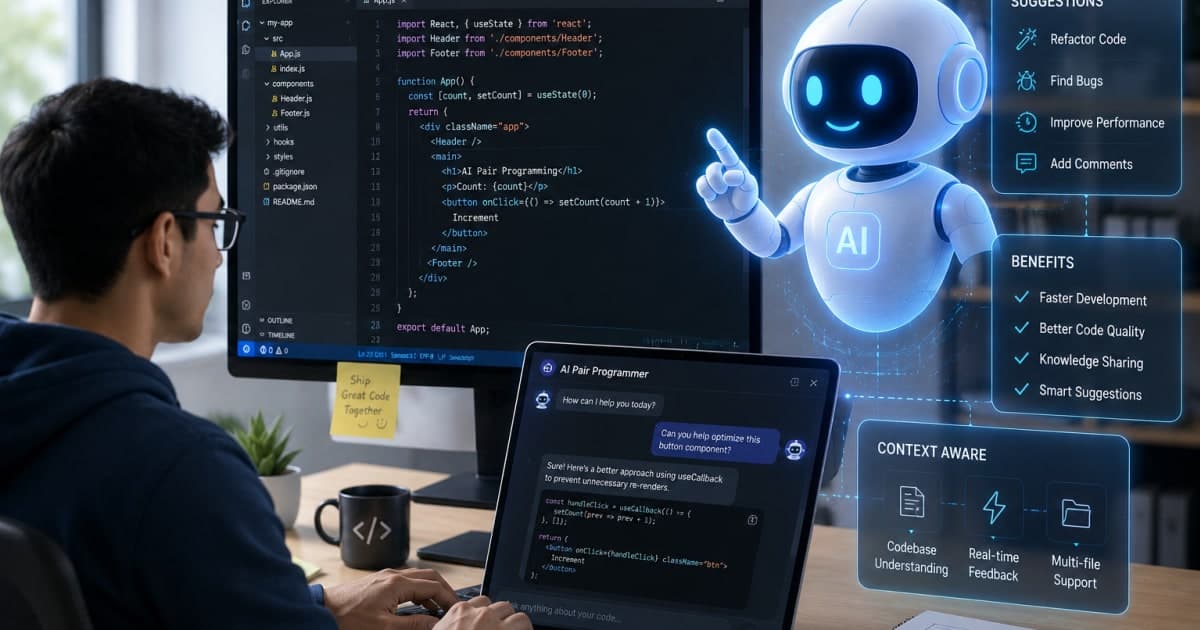
Integrating LLMs into IDEs (e.g., VS Code extensions) will allow developers to receive instant feedback while typing.
Explainable AI
Future systems will offer rationale for each suggestion, improving trust and facilitating learning.
Fine‑tuned Domain Models
Companies will develop proprietary LLMs fine‑tuned on their own codebases, yielding higher accuracy and compliance.
Automated Merge Decisions
In high‑confidence scenarios, AI could automatically merge PRs after satisfying all checks, further reducing manual overhead.
Security‑First AI
Dedicated models trained on vulnerability datasets will become standard, helping teams stay ahead of emerging threats.
Community‑Driven Feedback Loops
Open‑source LLMs will incorporate community contributions, ensuring continuous improvement.
Staying ahead of these trends will position teams to leverage AI as a strategic advantage, not just a productivity tool.
Conclusion
AI‑powered code review is more than a buzzword; it is a tangible solution to the scalability, consistency, and speed challenges that plague modern software development. By harnessing LLMs, teams can receive instant, actionable feedback, reduce human error, and free senior engineers to focus on complex problem solving. The key lies in a thoughtful implementation: start with small, well‑defined use cases, enforce structured feedback, and continuously monitor performance.
As LLMs mature and integrate deeper into development workflows, the vision of a fully automated, high‑quality code review pipeline moves from aspirational to inevitable. Embracing this technology today will prepare your organization for the rapid, secure, and high‑quality delivery that 2026 and beyond demand.
FAQs
1. How do I ensure that the AI does not expose sensitive code to third‑party services?
Run the LLM locally or in a secure, isolated cloud environment. Avoid sending proprietary code to external APIs unless encrypted and compliant with your organization’s data‑handling policies.
2. Can the AI replace senior engineers entirely?
No. AI serves as an augmented reviewer, handling routine checks and surface‑level issues. Human judgment remains essential for architectural decisions, context‑specific trade‑offs, and mentoring.
3. What if the AI flags a false positive?
Configure confidence thresholds and allow developers to dismiss or suppress low‑confidence suggestions. Use a feedback loop to retrain the model on correct decisions.